

The AI Revolution is no longer a futuristic headline, it’s quickly becoming the operating system of the modern economy. As a business owner, you’ve likely already identified the AI tools you want to implement to stay ahead. The hard truth is that the best AI strategy in the world will fail if your team doesn't know how to use it safely and effectively.

IT Support Business Models by Macro Systems
For years, we’ve seen the future of work as an abstract, distant concept that would eventually remove us from our cubicles. It has become abundantly clear that the future has arrived. The Mobile Office is no longer defined by a solitary laptop perched on a kitchen table or a temporary desk in a spare bedroom. Instead, it has evolved into a highly sophisticated, decentralized ecosystem of interconnected devices and cloud services that demand significantly more from IT infrastructure and support teams than ever before.
If you still view your IT department as a mere secondary expense, you are likely overlooking the most significant threat to your organization's profitability. In the modern landscape, digital infrastructure isn't just a static utility, it is the very plumbing of your revenue. It functions as either a reinforced vault protecting your hard-earned gains or a porous sieve where your margins quietly drain away. To truly safeguard your legacy, you must look past the technical jargon and recognize a fundamental truth: cybersecurity isn't a tech problem relegated to a basement office, it is a direct and measurable pillar of your financial stability.
Today's technology feels like a black hole to many business owners, a recurring line item that keeps getting more expensive without ever making life noticeably easier. If you have ever felt like you are purchasing software just to keep up rather than to get ahead, you are not alone. The goal should not be to buy more IT. The goal is to capture value. Listed below is how to bridge the gap between technical complexity and business growth.
If your cloud bill is the second-largest line item after payroll, but you still can’t explain exactly what you’re paying for, you aren’t running a lean operation; you’re paying a significant and ever-expanding growth tax.
For a business owner, cloud tracking isn’t about technical metrics like CPU usage or latency, it’s about margin preservation. It is the difference between scaling your profit and simply scaling your provider’s revenue. If you want to stop the end-of-month heart attack, you need to turn technical voodoo into a manageable business asset.
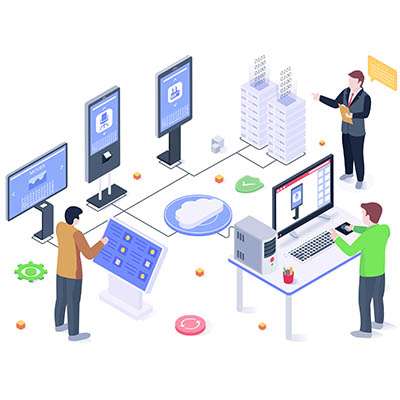
Take a quick walk through your company. When you look at the screens on the walls, what’s actually on them? If it’s a generic weather widget, a “Happy Monday!” slide that’s been up for three weeks, or a “No Signal” box, you aren’t looking at a technology investment.
You’re looking at a $10,000 screensaver.
There are two types of digital transformation: the type that streamlines a business into a powerhouse, and the type that turns into a ghost ship; perfectly automated, technically efficient, and completely devoid of life. Right now, we are witnessing a massive shift in the way people do things. While your competitors are busy bragging about replacing their support staff with agentic AI, what they are often doing is building a wall between themselves and their customers.
With AI now being used by adversaries to reverse-engineer patches and generate exploits in hours rather than weeks, our old Patch Tuesday rhythm is essentially an open invitation to hackers. The truth is, the patching gap is a competitive weakness.
If we want to protect our businesses without drowning our teams in manual toil, we have to stop treating patching as a checklist and start treating it as a dynamic, intelligent discipline. Here is how we’re rethinking the vulnerability situation.
Every modern business is a technology business: whether you run a boutique creative agency, a high-volume law firm, or a retail shop, your ability to operate depends entirely on your hardware, software, and connectivity.
When the Blue Screen of Death appears or your server decides to take an unscheduled nap, the clock starts ticking; and it’s ticking directly against your bottom line. This is where remote support shifts from being a nice-to-have to a mission-critical asset.