
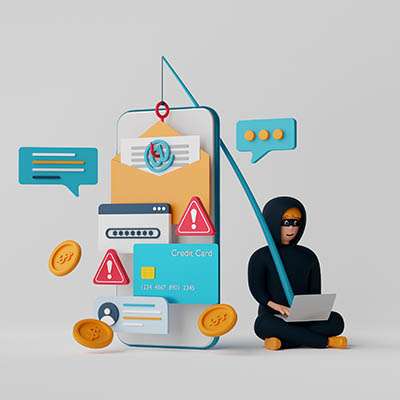
The greatest vulnerability in your business’ network security has nothing to do at all with the systems in place, it’s your employees who will ultimately put your business at risk. Hackers depend on the fact that your team is busy, stressed, and trying to be helpful, and this helps hackers engineer moments where employees will click first and ask questions later, much to your business’ detriment.
Macro Systems Blog
The scariest online threats are the ones you don't even see coming. Picture this: a hacker tricks one of your employees with a clever phishing email, steals their username and password, and just walks right into your network. No alarms, no warning.
The good news is there's a simple fix that can make a huge difference: Multi-Factor Authentication (MFA). Just setting this up is one of the biggest steps you can take to make your business much safer and a lot less likely to suffer a catastrophic cybersecurity breach.
From the classic Nigerian Prince emails to the cleverly crafted fake invoice, malicious digital correspondence is a constant threat to a business. It's not just about losing a few dollars. A successful phishing attack can cripple your operations, compromise sensitive data, and even lead to your organization's demise.
While email attachments are a huge part of your digital life, they're also a favorite sneaky entry point for hackers, viruses, and scams. We've all been there, a quick click before we even think. That split second of laziness can turn into a massive headache for you and your whole job.
Before you tap that little paperclip and potentially wreck your day (or your company's network), you need to take a beat. Listed below is an essential checklist for safely opening files sent via email.
Your company's relationship with IT has a direct correlation to how well it operates. If your technology fails, your business suffers productivity losses, as well as financial ones due to decreased reliability in the eyes of customers and clients. One of the best ways to ensure you’re following through on the promises you make to your customers is to implement a proactive IT strategy to replace the reactive approaches seen in the past.
All businesses need a little IT assistance from time to time, whether it’s for a simple issue with some software or a full-blown technology emergency. Cybercriminals will often pose as IT support in attempts to capture this low-hanging fruit. Your employees should know how to spot the following warning signs from a fraudulent tech support squad.
Cyber scams can be very well-crafted and dangerous, and a significant portion of this danger stems from the scammer's ability to effectively utilize the psychological triggers that we all possess to some degree. Today's security training tends to focus on what signs we all need to keep an eye out for, but it does little to explore why modern scams are as effective as they are.
Let’s fix that by taking a moment to examine the tricks the scammers play so you can be that much more prepared to stop them by understanding how they work.
There are few things as universally annoying as the constant stream of spam emails these days. From ludicrous pharmaceutical offers to urgent pleas for financial assistance from other nations’ royalty, our inboxes can often be likened to a digital landfill. What many people don't realize is that behind this persistent nuisance lies a huge, and surprisingly lucrative, industry.
The constant talk about cybersecurity can really be overwhelming. While some Internet tales may be exaggerated, the reality is that these cybersecurity risks are a serious concern for every organization. Is your business truly prepared to confront the sophisticated digital adversaries of our time? Listed below is a look at three prevalent cyberthreats that could inflict significant damage on a business, and what you can do to keep them from negatively impacting yours.
We're all busy. Whether you're steering the ship or making sure the daily operations run smoothly, cybersecurity might feel like another drain on your time. Imagine a day when everything grinds to a halt, trust evaporates, or significant money vanishes into thin air. These aren't abstract fears, they are all-too-real consequences of cybersecurity oversights, creating moments that everyone in a business, from top to bottom, desperately wants to avoid… and can.
The world of cybersecurity is in constant flux, demanding that businesses continually reassess their defensive strategies. A traditional focus solely on preventing breaches, while crucial, is proving insufficient in the face of sophisticated and persistent threats. As highlighted in a recent Illumio podcast episode, "Trust & Resilience: The New Frontlines of Cybersecurity," the very foundation of digital interaction—trust—has ironically become a primary vulnerability exploited by attackers. This necessitates a fundamental shift in perspective.
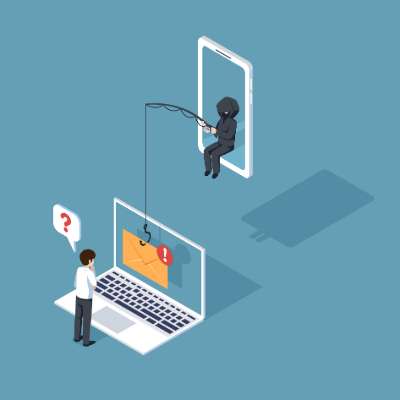
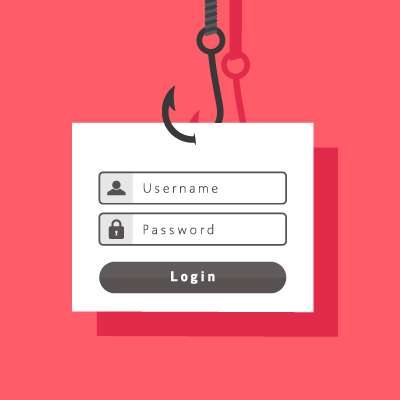
You open your email and you have a message claiming your bank account has been hacked. You click the link, log in, and, whoops, you just handed your credentials to a cybercriminal. You’ve been a victim of phishing, where scammers bait you with fake messages and reel you in like an unsuspecting fish. You don’t have to be their next catch. Listed below: how to recognize and fight back against phishing attempts.
Does it feel like scammers are everywhere? That's because they are. Every day they’re scheming up new ways to trick people into giving up money, data, or access to their accounts. One of the biggest problems we run into is that we’re bombarded with so many scam warnings that we start tuning them out. That’s called threat fatigue, the phenomenon when you get so tired of hearing about security risks that you stop paying attention, which is exactly scammers want.
Phishing is the most common way hackers trick you, so to speak, but have you ever wondered why it’s so effective? Listed below is a list of the reasons why phishing schemes are so enticing to even the most security-conscious individuals out there. You might be surprised to know that even security professionals can fall prey to these types of attacks, and for very good reasons.
Did you know that phishing is the most common security risk to your business? Any of your employees could become the target of a phishing attack, and all it would take is downloading the wrong file or clicking on the wrong link to expose your organization to security threats. Listed below is a refresher on the throwaway signs of a phishing attack and how to protect yourself and your team from harm.
Phishing is one of the most prevalent issues individuals and businesses must confront when operating online. This is because there are literally billions of these scam attempts sent each day. That’s right, billions. With over a hundred billion scam attempts sent every year, your business is already getting phished, it’s just a matter of time before someone falls for it.
The constant fear of falling victim to scams has become a harsh reality and is far from ideal. That being said, the good news is that there is always time to acquire the skills needed to avoid such scams. Listed below are ways to enhance awareness regarding the challenges posed by scams, not only in a business context but also in everyday life.