

IT Support Business Models by Macro Systems
The Federal Trade Commission has spent years providing businesses with guidance and advice concerning their security. Now, this guidance has converted into enforceable mandates.
In essence, your business needs to have systems and protections in place, not plans, in order to abide by last month’s executive order that focuses on the prevention of cybercrime and fraud. Listed below is what needs to be accomplished in order for your business to do so.
Do you look at your technology as a cost center to be managed, or as a springboard for new revenue? If you’ve been following us for a while, you know we like to think of it as the latter. Small businesses spend a lot of their IT budget just to keep the lights on, stuck in an endless cycle of “surviving” rather than “thriving.” But with a virtual CIO, or vCIO, your business can reframe the conversation surrounding technology and look at it as an endless realm of opportunity rather than an endless loop of costs.
Are you under the impression that having a backup is the same thing as a successful recovery? Modern businesses think they are mutually exclusive, but the fact remains that having a backup synced to the cloud is not enough to keep your business running when the odds are against you. In fact, your files might be fine, but your business could be dead in the water due to ongoing downtime.
In the frantic dash to deploy generative AI and predictive analytics, most leaders obsess over the glamour work: picking the right LLM, tweaking hyperparameters, or polishing the UI.
But beneath the hood, a gritty, structural reality is causing high-budget projects to stall out before they even leave the garage: Data Silos.
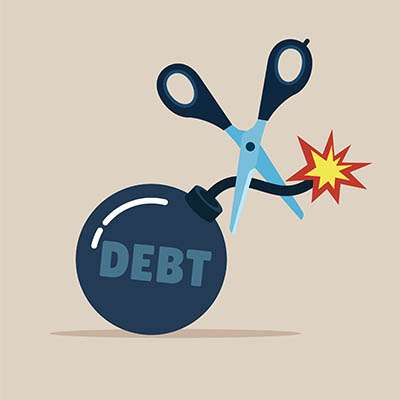
Is your network infrastructure a Frankenstein’s monster of mismatched tools and quick fixes? This is what most small business IT looks like; companies adopt solutions without a thought as to how they are supposed to work together, and it ultimately ends up impacting operations. This creates tech debt, and not the monetary kind, that is hard to bounce back from without taking a serious look at your IT practices.
There are two types of digital transformation: the type that streamlines a business into a powerhouse, and the type that turns into a ghost ship; perfectly automated, technically efficient, and completely devoid of life. Right now, we are witnessing a massive shift in the way people do things. While your competitors are busy bragging about replacing their support staff with agentic AI, what they are often doing is building a wall between themselves and their customers.
We’re sure at some point you’ve used the phrase, “If it ain’t broke, don’t fix it,” especially in regards to your IT. While it might feel responsible and safe to stick to this motto as much as possible, there will come a time when it becomes dangerous to hold fast to it. In fact, business technology professionals might even call this motto irresponsible. Here’s why.
Starting a business requires a certain mindset, one that demands a certain disdain for failure. However, this entrepreneurial mindset might actually hold you back from seeing success with your business’ technology. This month, we want to explore how the same mindset that has allowed you to build your business to where it is today is actually getting in the way of effective technology implementation, as well as what you can do about it.
It's a familiar challenge for businesses: how do you build customer loyalty and a strong user experience while also ensuring that their data is protected? Sustainable success depends on mastering this delicate balance. Instead of choosing one over the other, the goal is to optimize data protection without hindering your ability to engage customers and drive growth.
While data might be the new currency, your own business’ data may be a bit too messy to make full use of. You might be paying to store it and protect it, but you’re not doing as much with your data as you’d like. Here’s how businesses find themselves with these “data graveyards” and why it basically functions like a debt rather than an asset.
A disorganized workspace can lead to a disorganized mind. Whether you're working from home or in an office, keeping your workspace clean and organized can significantly boost your productivity, reduce stress, and even spark creativity. It's not just about aesthetics; it's about creating an environment where you can thrive.
Here are five tips to help you maintain a pristine and productive workspace:
You're in the middle of a critical presentation, and suddenly, your screen freezes. Or maybe your customer relationship management (CRM) system goes down during peak sales hours. Your first instinct might be to panic, to hit every button, or to call everyone you know. Listed below: how overreacting to your technology troubles can be just as bad as the troubles themselves.
Robust IT tools and services are not a luxury, but the very lifeblood for businesses of every size. They offer the essential direction, unwavering stability, and seamless connectivity required not just to survive, but truly thrive in an increasingly digital world.
Yet the questions remain: what exactly constitutes these pivotal "IT tools and services," and more critically, why should they take a top spot on your business priorities?
Starting a small business is exciting but keeping it running is the real challenge. Many businesses start with a great idea, a solid customer base, and high hopes, only to crash and burn because of avoidable mistakes. If you’re a small business owner or planning to become one, look out for these three major pitfalls that can sink your business faster than you can say bankruptcy.