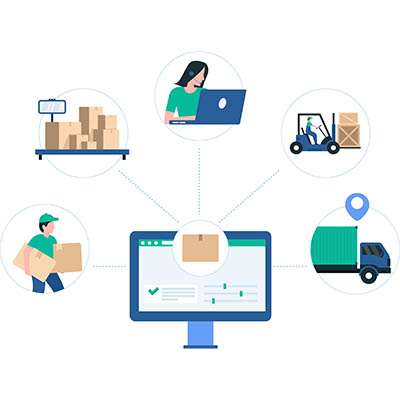


We see the behind-the-scenes of dozens of businesses while working in IT. To many, a Point of Sale (POS) system is often viewed as just a digital cash register, but it’s actually the central nervous system of a modern business. When it works, it is invisible; when it fails, the entire operation grinds to a halt. As we move through 2026, the complexity of these systems has reached an all-time high. Listed below are five of the biggest challenges we see businesses facing today from an IT perspective.
Macro Systems Blog
You’ve probably looked at your business’ technology bills and seen nothing but dollar signs leaving your bank account. For many, IT feels like a necessary evil or a cost center that only gets attention when something breaks. The hard truth is that many businesses fail to scale because their technology wasn't built for the growth they planned.
Working in IT, our job is to worry so you don’t have to. The things keeping us up at night in 2026 are significantly different from the headaches of five or ten years ago. Thanks to the invisible power of AI-driven automation and mature cloud ecosystems, many of the manual, soul-crushing tasks that used to define IT support have essentially vanished.
What goes through your head when you hear the words “IT audit?” Are you concerned about your business’ deepest and most shameful technology secrets being exposed, or are you excited about the opportunity to resolve issues that you might not even know exist? We hope you have the latter mentality, as it’s the appropriate one, especially if you want to build a business that stands the test of time.
Does your business have the good fortune of having an in-house IT department? More likely than not, even if you do, your department has maybe a couple of technicians at most, and they are all up to their ears in work, whether it’s keeping up with maintenance or struggling to implement new and innovative solutions. If you’re looking for ways to upgrade your organizational IT infrastructure, we recommend you start with a network audit to determine what needs to be done, and how Macro Systems can help you do it.
Business leaders and decision makers have a lot to deal with… and that’s before factoring in all the problems and obstacles that arise over the course of their normal operations, especially when it comes to the technology their businesses rely on.
Of course, a smart business owner would want their technology to be as reliable as possible, available without requiring conscious effort. As it happens, one of the modern options for IT support enables circumstances to be as close to this ideal as possible… but the other predominant option ultimately gives you more to worry about.
Are you blindly sprinting forward where your technology is involved, picking things that sound good, hoping you have enough forward momentum to reach the next stop? Alas, this approach is often an option that many businesses take, usually to their detriment.
We want to remind you that there is a better way: creating an IT roadmap to strategically merge your technology with your more functional business goals, helping you progress with every dollar invested.
The grind of daily business operations can feel relentless. From overflowing inboxes to endless task lists and scattered information, it's easy to get bogged down in the minutiae. That’s why it's imperative to know and utilize the right technology to transform tedious tasks into strategically streamlined workflows, providing you and your team with more time and clarity. Listed below is a look at some of the technology you can use to take a little stress off your grind.
Robust IT tools and services are not a luxury, but the very lifeblood for businesses of every size. They offer the essential direction, unwavering stability, and seamless connectivity required not just to survive, but truly thrive in an increasingly digital world.
Yet the questions remain: what exactly constitutes these pivotal "IT tools and services," and more critically, why should they take a top spot on your business priorities?
If you or your organization are concerned about cybersecurity, we’d like to say, “Congratulations, you get it!” Too many people fail to take cybersecurity seriously, and with hackers and data breaches making headlines worldwide, you cannot underestimate them. Listed below is how a cybersecurity consultant can save you time, money, and stress over your security systems.
Professional services encompass many of the “experts” people rely on, and modern firms in this sector rely heavily on technology to increase efficiency, enhance client service, and streamline operations. In this month’s newsletter, we’ll explore four key technologies that professional services firms rely on.
It should come as no surprise that a modern business’ information technology and security precautions are frequently tied closely together—and wisely so. Not only can today’s technology greatly augment the security a business can defend itself with, but advanced security is needed to protect the critical IT that modern businesses rely on to function.
This makes it imperative that these two aspects of your business work together, so let’s go over some ways to ensure they can do so optimally.
It’s always an exciting time when you commit to a new IT project that promises to change your business for the better. Naturally, the exciting stuff is what comes after the implementation process—a process that can range from easy-as-pie to incredibly complex and stressful, depending on the expertise your company employs.
Technology has ingrained itself into just about every facet of modern life, especially in the business world where every competitive edge makes a difference. Many small and medium-sized businesses just don’t have the staff on-hand to manage and maintain their technology solutions, instead opting to outsource this critical responsibility to managed service providers (MSPs).
For any business to succeed it needs to exhibit some degree of empathy toward its audience. Otherwise, the services and products they provide will be less likely to meet the priorities and needs that its targets are experiencing.
As a managed service provider, this is perhaps most true of us, as our services revolve around predicting the needs of our clientele and resolving them… ideally, before the client even realizes they have a need to fulfill.
For the IT administrator and the small business owner, it can be a bewildering experience when your organization comes under siege from employee-induced cyberthreats; especially if you, like many other organizations, have started prioritizing security training. Even if the threat is thwarted early and the effect on the business is negligible, it is critical that you trust the people who have access to your organization’s digital resources. Listed below are some of the reasons some of your staff take cybersecurity initiatives worse than others.
Businesses will often go into the process of self-improvement with unrealistic expectations for how much they can significantly improve their functionality. This simply is not true, and sometimes business owners need to realize that real change—the kind that yields real results—takes time. Fortunately, there are some actionable steps you can take to ensure that your business is moving in the right direction.
We have the pleasure of working with many organizations, some of whom take more advantage of our remote services than others. We wanted to take a few moments to discuss one of our more discreet client businesses and a challenge we helped them resolve. Hopefully, sharing this won’t land us on the naughty list.
Having a professional perspective always helps, it’s just that in today’s world of inflated rates for everything, it’s hard to find experts that don’t charge an arm and a leg. IT consulting plays an imperative role in helping businesses gain a better perspective on their technology landscape. Listed below are several ways in which IT consulting can contribute to a more informed and strategic approach to technology within a business.
The cloud has allowed managed IT service providers, or MSPs, to fill a uniquely shaped void in many companies’ business models. Working with a managed service provider can make up for all of the traditional challenges of technology maintenance and management while also affording you unique opportunities to limit costs, reduce waste, and increase productivity.