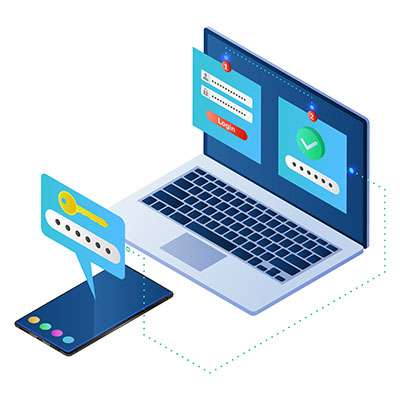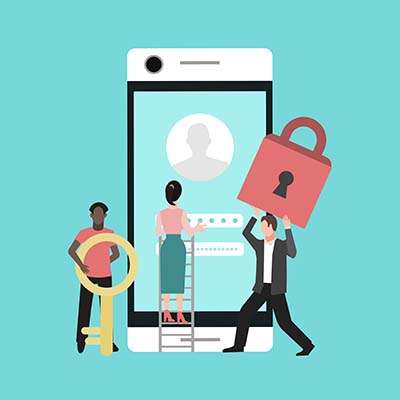

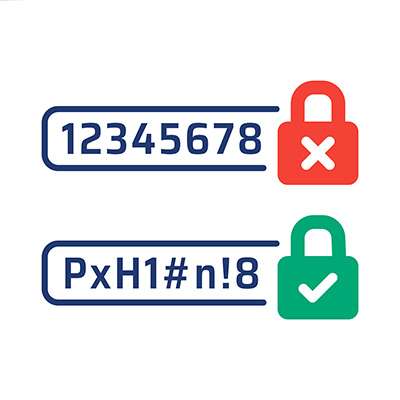
User authentication is an imperative security feature for a business, specifically because it helps to reduce a significant threat to your business. This is why we’re so adamant that you should require multi-factor authentication wherever it is available… but is a better way to authenticate your users on the horizon?
IT Support Business Models by Macro Systems
Passwords have been a primary data security measure since 1960, when MIT researcher Fernando Corbató suggested the practice, although even he is reportedly slow to take full credit. Why? Well, if you ask Corbató (and his contemporaries, who were the first to implement passwords as we’d recognize them today), the security concerns were limited.
So, have we reached the point where it would be best to replace passwords as the default authentication measure?
Keeping a secure password is a little confusing these days, especially when the standards for what is an acceptable, complex password seem to keep shifting back and forth. Let’s take a look at some of the industry-standard best practices for passwords and how you can implement them for your business.
Most accounts these days require a password and, as such, the average user has countless of these codes that need to be kept secure. Some web browsers have built-in password management tools to help make them more user-friendly, but with so much convenience involved, one has to ask whether or not these built-in management tools are as secure as they should be.
If you were told that one variable was responsible for more than 80 percent of cyberattacks, what would you guess that variable was? If you guessed “stolen access credentials,” you’d be right. The standard username/password combination may soon be a relic of the past as more tech companies transition to alternative authentication measures.
The password is the primary element of both data security and user authentication; this makes the construction of them extremely imperative to protecting digital assets. Alas, not everyone comprehends how to construct passwords that actually work to protect the information on the other side. Listed below is a discussion on how to create a solid password that works to keep your digital resources safe.
Protecting your online accounts, your data, and your clients’ information is now more critical than ever. Industry and state-mandated compliances are now forcing businesses to tighten their cybersecurity, and it’s imperative that every human being on the Internet take their own personal security seriously. This guide is designed to offer the best practices for strong passwords.
Passwords can be irritating. However, they are also incredibly imperative to your organization's overall security strategy. We’ve all heard the suggestions on how to create secure passwords; as it turns out, there is more to modern security then that. Let’s explore a few options to help you create useful passwords, and take a look why passwords are only the beginning.
Passwords are always a significant irritation for businesses, but in some industries, their importance is highlighted more than others. Specifically, government-based businesses need to be prepared to use more secure passwords. Obviously not all organizations are government-based, there’s something to be said about proper password practices that all organizations can learn something from.
You’ve heard it said that it’s a best security practice to routinely change your passwords. The idea here is that, if a password were stolen, then it would lose its value when the user goes to change it. While this sounds like solid logic, new research shows that it may actually be better NOT to change your passwords.
As technology advances and allows for common pain points to be corrected, many of today’s most well-known entities will adopt new solutions to ease the experience of their customers and clients. Take, for example, eBay. The famous reselling site has been taking steps to install an assortment of new features to improve its customers’ experience.
Passwords are unavoidable these days, whether they’re required to access an online account, or access the devices utilized to open these accounts. While both types of passwords can make for ideal security conditions, this is only the case if the passwords are strong; if your passwords can be accurately guessed by someone else, can you really label it as a security measure? New research from SplashData reveal that passwords are not being considered as much as they should be.
We see a lot of password-bashing these days, and some people have lost faith in them as a security measure. But, unfortunately, a lot of the blame for this lies in human memory. We just don’t pick passwords that are strong enough. In fact, a mind-numbing one in 20 people still use “password” to keep their information safe.
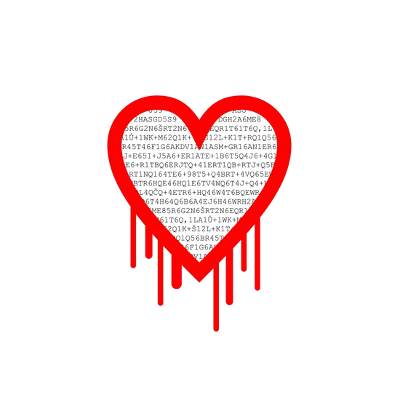
April 7th 2014 was a big day for the world, not only because Microsoft ended security support for Windows XP, but because a massive security flaw was found in the OpenSSL cryptographic library. This problem, called the Heartbleed bug, was found by Google Security, and it leaks information from any applications and services utilizing OpenSSL. The problem, however, is not that it was found; the problem is that over two-thirds of the entire Internet contains sites that utilize the OpenSSL/TLS protocol specification. It also doesn't help that this bug has been active since December of 2012.
All that stands between a hacker and your sensitive information is one puny password. You may think that your password is uncrackable because it has served you well all these years, but the reality of the situation is that an experienced hacker can break almost any password. Here are the most popular methods.
It's a network security best practice to regularly switch out old passwords for new ones. However, if you're the one changing and distributing the new passwords, you may face resistance from office workers that see this mandate as an inconvenience. To make sure everyone is onboard, you will need to preach the importance of password security.