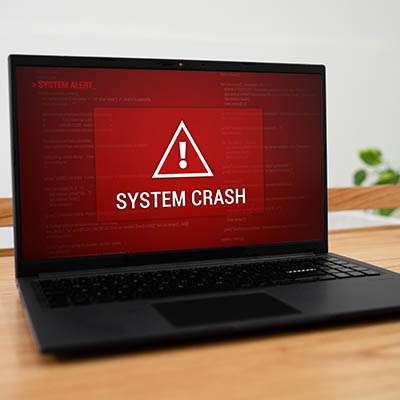



Few things derail a productive workday quicker than a computer that suddenly freezes, displays an error screen, or powers down without warning. Beyond the immediate headache, unexpected system crashes interrupt imperative work, threaten unsaved data, and point to underlying technology problems that need attention.
IT Support Business Models by Macro Systems
Most remote meetings fail because we expect outdated communication systems to handle modern collaboration. We spend the first ten minutes of a call troubleshooting audio issues, and the next twenty talking over each other because of a half-second lag. It is a massive drain on productivity, and it is entirely avoidable.
Enhancing your remote meetings is not about buying flashy new video gear, it's about fixing the underlying infrastructure that carries your voice and data.
When a business first starts to gain traction, the initial scaling phase feels exhilarating: revenue is climbing, you’re adding new clients, and your headcount is expanding. On the surface, everything looks like a massive success, but behind the scenes, a quiet danger begins to brew.
To keep up with rapid growth, various departments might start adopting new software tools on the fly—tools that don’t talk to each other. Before you know it, your business is built on systems that require double data entry, custom spreadsheet workarounds, and fragile third-party automations.
The marketing in the technology industry loves using complicated words for simple ideas, leaving normal business owners feel left behind. Looking past all the fancy sales pitches reveals that the Internet of Things is a practical concept; it just means putting an internet connection inside everyday equipment so those devices can send and receive useful updates.
This allows basic tools like your office thermostat, door locks, delivery trucks, and security cameras to talk over the internet. The main goal is simply getting helpful, quick updates sent straight to you to run things better.
For decades, Google was synonymous with online search, so much so that it became the accepted verb for that very activity. Today's search engine optimization practices are, for the most part, intended to rank you higher on Google’s results page, simply because it holds such a high market share amongst search engines.
The advent of AI has changed things. Your results page is now populated by AI-produced overviews of your search results, blended with advertisements and links to other services Google owns. Long story short, Google is changing, potentially enough for you to consider an alternative search engine as your go-to resource.
One month ago, the United States Federal Communications Commission put forth a ban on the sale of all Wi-Fi routers made outside the US, giving manufacturers the option to apply for a conditional approval exemption on the agency’s website.
Let’s talk about what this ban is going to mean to your business (and to your entire team’s personal lives) as things progress. Fair warning, things aren’t going to be simple.
Small businesses tend to believe that the best IT partner you can have is the one that swoops in at 1 a.m. to fix a crashed server or neutralize a cybersecurity threat. We celebrate their heroics, provided they get your network back online in record time… but if your IT provider is constantly having to save the day, it means your day was ruined in the first place.
The biggest time thief in 2026 isn’t a slow computer, it’s a software silo. This happens when your various tools, including your CRM, accounting software, and project management apps, don’t talk to each other. When your apps are siloed in this way, your employees become the human bridges that connect them, and that comes at a cost.
For years, the firewall was seen purely as a defensive tool, an all-in-one solution with antivirus, web filtering, and intrusion protection. These days, they can potentially serve a much greater purpose beyond simple network security. When leveraged right, you can use the immense amount of data firewalls track to identify bottlenecks, optimize workflows, and make smarter infrastructure investments.
Let’s imagine you recently started working with us. We’ve signed a contract, payments have been exchanged, and your IT is now under our care. One day, after your payment has successfully transferred, one of your workstations suddenly freezes up. One could hardly blame you for wondering why you were paying money to us if these kinds of issues still happen.
The truth of the matter is that our proactive IT services aren’t about eliminating issues and errors; it’s about avoiding everything possible and having strategies in place to address what can’t be.
It may sound like a great get-out-of-jail-free card: “Oh, I’m so sorry, the AI said this, and I just went with what it said.” Not so fast!
While it would be nice to have a default scapegoat like that, it didn’t work when you blamed Baxter for eating your homework, and it won’t work now. Listed below is why AI makes mistakes, how these mistakes can trip you up, and how to avoid these pitfalls.
Imagine one of your top employees suddenly stops caring. They aren’t leaving the company, they’re just leaving the conversation.
This is the reality of quiet quitting, and it often starts with something as small as a "ping." We’re talking about notification fatigue, the silent productivity killer. Listed below is a break down of why your team is drowning in pings and how you can throw them a lifeline.
Does your business operate in the moment, or does it prioritize what’s just around the corner? As a business owner, you have a delicate balance to strike between the two, and where technology is concerned, the answer is not always so clear-cut. But it’s generally better for your business to look at technology management with the perspective offered by an IT roadmap to inform your decision-making, from everyday implementations to major deployments.
Forget the sophisticated cyber-attacks you see in the news. More often the real business killer is much more mundane: that aging server in your storage room. Many business owners assume that if it’s still humming, it’s still working. Alas, hardware doesn’t just retire, it crashes, usually at the worst possible moment. When a primary server fails, it doesn't just take your data with it; it takes away your ability to compete.
We see the behind-the-scenes of dozens of businesses while working in IT. To many, a Point of Sale (POS) system is often viewed as just a digital cash register, but it’s actually the central nervous system of a modern business. When it works, it is invisible; when it fails, the entire operation grinds to a halt. As we move through 2026, the complexity of these systems has reached an all-time high. Listed below are five of the biggest challenges we see businesses facing today from an IT perspective.
Working in IT, our job is to worry so you don’t have to. The things keeping us up at night in 2026 are significantly different from the headaches of five or ten years ago. Thanks to the invisible power of AI-driven automation and mature cloud ecosystems, many of the manual, soul-crushing tasks that used to define IT support have essentially vanished.
Is your organization still depending on a patchwork system of spreadsheets, sticky notes, and emails to manage all of its customer relationships? This kind of manual work is not cheaper or more efficient; it only accumulates organizational debt that will eventually come due. Poor customer relationship management results in hundreds of hours of lost productivity throughout the year, directly translating into lost sales and profits for your business.