
2014 has been a year of technological advancement, but with any kind of advances such as these, there will always be those who want to steal the work of others. According to the Identity Theft Resource Center and , as of March this year, there have been 204 instances of data breaches this year alone. These affected companies are perfect examples of why web protection is important. Macro Systems can provide you with this protection and peace of mind. Here are a few of the more unbelievable breaches, most of which could have been easily avoided.
IT Support Business Models by Macro Systems
April 7th 2014 was a big day for the world, not only because Microsoft ended security support for Windows XP, but because a massive security flaw was found in the OpenSSL cryptographic library. This problem, called the Heartbleed bug, was found by Google Security, and it leaks information from any applications and services utilizing OpenSSL. The problem, however, is not that it was found; the problem is that over two-thirds of the entire Internet contains sites that utilize the OpenSSL/TLS protocol specification. It also doesn't help that this bug has been active since December of 2012.
It's crucial that your company's network has a strong firewall in place to keep your data safe; although, one firewall may not be enough. In the case of an actual fire, you will want to have a real firewall to keep your servers safe. We're talking about a firewall for your firewall. This sounds redundant, but redundancy makes for good security.
We live in a time where information technology has touched every facet of life. It would be a fair bet to assume that, at this point, it is more commonplace than a trend. We are inundated with Internet-connected computer systems in every aspect of life. We use automated tellers to do our banking, most major retailers have automated checkouts to supplement the work staff they have in place, and even your Grandma uses Gmail. With this technology saturated into the culture, there are many pragmatic uses that are just now being discovered and implemented. Nowhere is this more true than in the health care industry.
Tech savvy individuals and businesses alike have moved away from traditional Internet browsers such as Microsoft's Internet Explorer and Apple's Safari to Google's Chrome browser. After all, many people enjoy having a simplistic, yet powerful web browser that easily integrates it's Google Docs tools and Gmail email service. However, users may want to think twice about using the browser now that a new YouTube video has surfaced entitled "Chrome Bug Lets Sites Listen to Your Conversations." In the video, user Tal Ater walks through a very dangerous exploit that allows anyone to access your microphone through Google's voice recognition software embedded in Chrome.
You may think that the standard security policies that come with your email account can protect you from hackers. It's an easy mistake to make, but the truth of the matter is that, if a hacker really wants access to an account, then they will employ every tactic possible to get it, which can make standard password security measures woefully inadequate.
With the NSA and Edward Snowden making headlines around the world, it's enough to make any user of the Internet think twice about online security and wonder if they are being monitored or not. Google Search has been a popular hub for third party monitoring, which makes Internet users ask, "Is there a more secure search engine available?" There is with DuckDuckGo.
All that stands between a hacker and your sensitive information is one puny password. You may think that your password is uncrackable because it has served you well all these years, but the reality of the situation is that an experienced hacker can break almost any password. Here are the most popular methods.
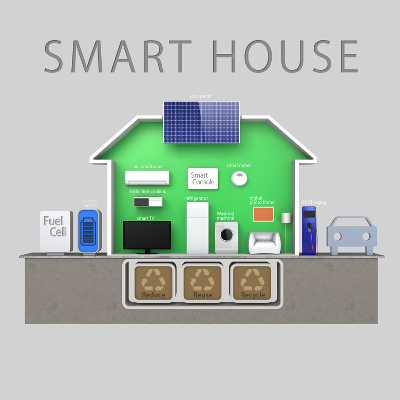
Do you think your computer is the only technology you own that is vulnerable to hackers? You may be surprised to learn that there are other technologies in your office and home that can be hacked without you knowing about it. Here's a list of five of the most surprising technologies that may be putting your information at risk.
It's a network security best practice to regularly switch out old passwords for new ones. However, if you're the one changing and distributing the new passwords, you may face resistance from office workers that see this mandate as an inconvenience. To make sure everyone is onboard, you will need to preach the importance of password security.
Some places on the Internet are only suitable for secret browsing. Maybe you're shopping for a present and don't want your links to show in your browsing history, or maybe you don't want the customized ads to reflect a private interest. Whatever your reason is for wanting to anonymously browse the web, here's how you do it.
Your identity has quite a lot of value, especially in the wrong hands. Security firm ZoneAlarm put together some numbers in 2011 concerning identity fraud, and it even shocked us. Let's talk about a few of these statistics and what it means.
Email is (and has been) a prime method of communication for businesses of all sizes. With email comes a whole slew of issues that are essentially synonymous with the technology; spam, information overload, phishing, and information privacy. Even Metro Washington, DC small businesses that only do business locally are at risk of these issues. Personal email accounts are equally at risk. Employing proper precautions and practices whenever communicating via email is very important to prevent the risk of security compromises, monetary loss, and even legality issues.
Today’s headlines are dominated by stories of major companies getting hacked, making the average computer user feel uneasy about their security. If you’re solely dependent on a measly password to protect you from hackers, then you’ve got good reason to worry. Adding a second layer of verification is an easy way to protect your information. Here’s how to set up 2-Step Verification for your Google account.
In this day and age, a password isn’t enough to keep your accounts secure from attempted hacks. Passwords can be cracked as easily as anything. A lot of businesses have moved to two-factor authentication in order to preserve their data. There are several ways of using this for your business, but a new startup called BioCatch is developing an authentication procedure which looks at your mouse activity.
Agent Chrome is a pretty well-known guy in Google City. In fact, you could say he was the top of his class at Browser University, and everybody who is anybody knows who he is. When on the job, Agent Chrome sometimes needs to lay low and avoid the prying eyes of the masses around him. And this particular operation, rightfully dubbed “Incognito,” is one such occasion.
You know the saying “you can never be too careful”? It’s always said by the person who understands the value of proceeding with caution, and understands that all it takes is a moment to lose everything. In some cases, it could be your workplace dignity, but in others, you need to cover your tracks to prevent hackers and other miscreants from performing the unspeakable: messing with your computer while you’re away from it momentarily.