

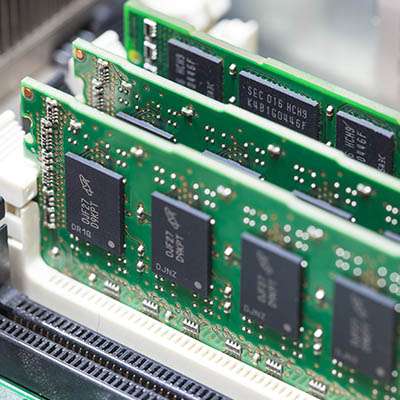
The second part of our desktop buying guide will focus on RAM, or random-access memory. The primary goal is to clear up misconceptions about what RAM actually is; many users don’t comprehend the difference between storage and memory.

The second part of our desktop buying guide will focus on RAM, or random-access memory. The primary goal is to clear up misconceptions about what RAM actually is; many users don’t comprehend the difference between storage and memory.

Productivity is the goa in business. Alas, there are so many interruptions in the workday, you have to capitalize on the moments where you’re in the zone. To get in the zone more frequently, and to measure the ability of workers to find their zone, companies have started using trackable systems fueled mainly by their management software-usually a CRM, but sometimes a larger, more integrated solution-to pump out metrics designed to give managers an idea how their teams are performing, and give them an idea about how to best utilize them.

Communication is a vital part of the workplace, and modern tools have made it more efficient than ever before to stay in contact with co-workers. One of the most imperative tools in the modern business’ repertoire is instant messaging, which is somewhat challenging to utilize without a way of ensuring productivity and professionalism.

Technology has become so mainstream in the office environment that work can be done from just about anywhere on any device. This has led to many businesses implementing a remote workforce, at least some of the time. There are actually several advantages to remote work, even for the employer.

The office is a location where work gets accomplished, but it’s also known as a sedentary lifestyle. Workplace wellness programs may be an $8 billion industry, but the effectiveness of these programs has yet to be determined. Below we'll take a look at what kind of office wellness programs might work for your business.
Small businesses have to do more with less, leading to them increasingly looking to technology to fill the gaps. The issue is that many small businesses feel like the big tech companies don’t comprehend their needs. If you feel like the technology options you have at your disposal don’t necessarily fit your organization's needs, consider that these robust solutions have all the functionality that you need to manage your own business processes. Let's take a look at some of the enterprise technology SMBs are using to move their businesses forward and some of the considerations you may need to make to leverage a software solution that doesn’t seem like it fits.

There aren’t many more joyful moments for a person than when they land their first big job. The opportunity to utilize the skills they have learned, and to pay off some of the debt that knowledge set them back, are two activities most people who are in this position savor. Nonetheless, you can’t expect these opportunities to keep your employees around forever... you need to meet and manage their other expectations of the workplace.

In the modern competitive business environment, you need all the help you can get. One of the largest advantages you can achieve for your organization is to take advantage of a trusted and reliable managed IT provider that can give your business advice on how to navigate the murky waters of the technology world.

As the owner of a business, you must be able to see the fine line between being comfortable with your position and being dangerously complacent. Otherwise, you run risk hindering your organization's growth, or even actively sabotaging its success.

Your organization's technology solutions may be a major point of contention for your bottom line, but that doesn’t mean that you can’t create value with it. One of the best ways you can create value for your companies' IT is by implementing a better way of managing it. Macro Systems will walk you through what it means to shift from break-fix IT to managed IT services, as well as what questions you should ask to expedite the process.
Automation does nothing but help businesses, but can the same be said for the employees that work at these businesses? With more systems depending on some type of artificial intelligence, smart automation could replace up to 25% of the current workforce over the next decade. Let's take a look at the importance of profitability and how AI is likely going to lead in a new era of human existence.

A friend tells you a story about an app that is really fun or convenient so you download it. After you download and open it up, you receive a pop up asking if you want to allow notifications from that app. You click “yes” just to get to the application and sometime later, you are asleep or working and you get a notification from the company behind the app you downloaded. Then you get another one, and another, and since you’ve click “yes” on 25 little pop-ups, you are getting a constant flow of notifications that you could completely do without. Does this scenario sound familiar? Unfortunately, in our modern world, it probably does.

Do you ever feel like your companies' meetings just don’t go as planned? These are generally the most perilous type of meetings; employees who have better things to do may feel that meetings aren’t a proper use of their time or skills. If you are having meetings that seem like nothing more than a waste of time, it’s your responsibility to start contemplating about how you can improve them. A few tips are listed below:

Outsourcing your IT management or project management is routine for modern businesses, but it wasn’t always. For the first couple of decades of IT for business, outsourcing was the only way you were going to get a piece of technology up and working again without massive capital investment. Below we'll take a look at the break/fix method to IT management and how it is far more expensive than you may be aware of.

You could argue that social media is the defining feature of the information age. It has changed the way people communicate, market their products and services, and it has brought a litany of problems into public focus. Social media also currently costs many organizations billions of dollars a year in lost productivity. Below are a look at the pros and cons of social media, and how your company can put yourself in a net-positive position regarding the technology.
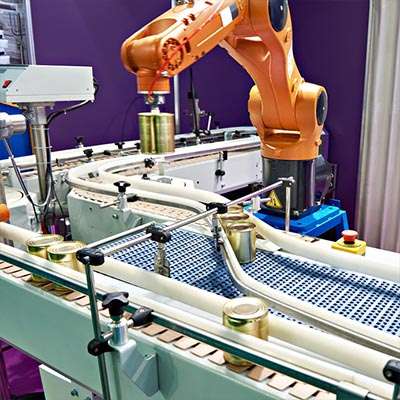
There are some times where productivity is a challenge, especially if you’re being asked to work on something monotonous or repetitive. Automation solutions can be utilized to make these tasks less irritating. Depending on the purpose, they can also become an integral part of your organization's productivity strategy.
Some of the most successful companies in the world are utilizing machine learning, and its artificially intelligent capabilities to upgrade their offering or effectiveness. Below we explain what machine learning is and how it is beginning to work for organizations just like yours.

If you are a business owner that has been in business for a decade you’ve probably seen how emerging technologies have altered the face of business. Technologies such as cloud computing have created opportunities for many businesses to get the powerful computing infrastructures they need without enormous upfront costs. As this trend continues, the IT services have begun to move past core IT management and support and onto providing real solutions for the modern business. Let's take a look at how the Managed Service Provider (MSP) is at the forefront of a data revolution that has no end in sight.
It's likely that you’ve had to deal with the following scenario: You're efficiently working when you try to open an application only to be rebuked by an error message on the screen that tells you that there is some type of critical error. You close that out hoping that it was a one-time exception, but it appears up again. You think to yourself, “Why does this always happen?”
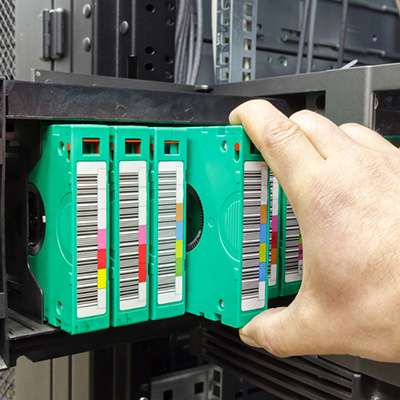
Your organization needs to have data backup and disaster recovery; there is no exception to this rule. Your business is risking far too much by not implementing data backup and disaster recovery. Below we will review situations in which a company may find its data endangered, as well as how modern businesses can keep their data secure.


