
IT Support Business Models by Macro Systems
The Federal Trade Commission has spent years providing businesses with guidance and advice concerning their security. Now, this guidance has converted into enforceable mandates.
In essence, your business needs to have systems and protections in place, not plans, in order to abide by last month’s executive order that focuses on the prevention of cybercrime and fraud. Listed below is what needs to be accomplished in order for your business to do so.
It may sound like a great get-out-of-jail-free card: “Oh, I’m so sorry, the AI said this, and I just went with what it said.” Not so fast!
While it would be nice to have a default scapegoat like that, it didn’t work when you blamed Baxter for eating your homework, and it won’t work now. Listed below is why AI makes mistakes, how these mistakes can trip you up, and how to avoid these pitfalls.
If you put yourself in the shoes of an insurance company, you might find yourself thinking twice about protecting someone who actively partakes in risky behavior. The same can be said for a business insurance provider, especially when the behavior can easily be prevented through proactive and preventative measures. This is why many insurance providers are establishing minimum safeguards and compliance requirements, if only to protect their own skins.
Many market analysts and industry experts foresee an increase in the cost of hardware. We recommend that you take matters into your own hands to avoid the price hike and buy your new IT now before it costs you more to do so. The implementation of any proposed tariffs could impact the market as early as February 2025, so we wanted to discuss what you should consider when purchasing new hardware today.
Would you trust a bank that locked its doors for the night but left all its cash in a big pile in the middle of the floor? Probably not— if someone managed to get through the doors, nothing would stop them from helping themselves to the money inside.
This is effectively how cybersecurity once worked, with the presumption that if someone had access to a network, they had permission to access any data on it. Luckily, many businesses have made the switch to a better approach, known as zero-trust security.
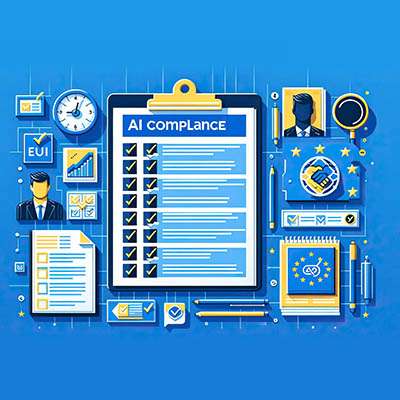
One of the many tasks undertaken by the United Nations is to protect human rights around the globe while also working to develop more sustainable and climate-friendly development. As such, the UN has recently taken an interest in the development of artificial intelligence, hoping to create guidelines that allow us to get the most value out of AI without creating more significant problems.
You might have noticed that business insurance companies are starting to show an interest in how you are protecting your technology and data. If your org has been in touch with your insurance provider regarding modifying or renewing your business insurance, you were likely handed a lengthy questionnaire about your cybersecurity. Let’s take a look together to help you make informed decisions on how to handle your IT and how to prevent your insurance costs from skyrocketing.
The United States Federal Trade Commission’s mandate is to prevent fraud and promote consumer protection in today's interconnected world, where the digital landscape continues to evolve at a frenzied pace. The FTC recognizes the importance of safeguarding consumer information and has implemented their Safeguards Rule as a means to ensure that businesses protect sensitive data from unauthorized access and misuse. Listed below is a look at the Safeguards Rule and what you need to know about it in regard to your organization.
Compliance is an imperative element of many businesses’ requirements, with severe penalties as a consequence if the prescribed standards are not met. Even more critically, most compliance requirements and regulations are put in place for the welfare of not only the business, but its clientele as well. This makes it important to know which apply to your business, and how to meet them fully.
Every business’ clients trust that they’re taking every measure possible to protect data, like personal information or financial records. That being said, with the number of businesses using electronic records continuing to climb, along with the rise of cybercrime, many industries have begun to impose regulations and compliances that are designed to keep personal information secure. Health and finance are two of the most heavily regulated industries, with the government having stepped in and set a specific standard of data security regulations that these companies must comply with.
Cloud computing has been touted as one of the most innovative and important technologies for smaller businesses as they look to compete with larger companies. How it makes this possible is by offering dynamic computing environments that can help bring these smaller businesses into the information age without saddling them with massive infrastructure costs while doing so. That’s not to say that the cloud is cheap by any means, and this month we will discuss how cloud computing is a great option for nearly any business.
Regardless of your industry, there are going to be certain regulatory standards that you will be responsible for upholding. Many of these standards will be related in some way to your cybersecurity. Some of these cybersecurity standards are listed below, as is why compliance is so imperative for your business.
The cloud is a great opportunity for businesses to enhance accessibility of data and increase productivity, especially while remote, but for those who do not know how to approach it, the cloud can be intimidating. Listed below is the case for a private cloud solution and why you should consider it as a viable option for your business, even if it does not seem like it at the moment.