

Have you ever stopped to ask yourself if the person you’re talking to on the phone is an AI system or an actual human being? It’s expected that in 2026, you’ll be asking this question a lot more, especially with the rise of agentic AI. This development takes the vulnerability that already exists in your human infrastructure and attempts to make it impossible to stop. Below we’ll explore agentic AI, what it looks like, and what you can do to put a stop to it in the years to come.
Macro Systems Blog
If you want to impress the boss, it helps to make yourself look as impressive as possible. One way to do this is to be especially engaged and responsive in your email practices… and to accomplish this, it helps to keep your inbox organized and managed.
Listed below are some simple tips that you can use to show off how professional you are with your emails as you use Gmail.
We’re sure at some point you’ve used the phrase, “If it ain’t broke, don’t fix it,” especially in regards to your IT. While it might feel responsible and safe to stick to this motto as much as possible, there will come a time when it becomes dangerous to hold fast to it. In fact, business technology professionals might even call this motto irresponsible. Here’s why.
When it comes to cybersecurity, the most critical aspect is usually pushed aside in favor of solutions that are easier to control, like firewalls, encryption, and modern detection and response tools. That being said, the biggest and perhaps most imperative factor affecting your business’ security is, in fact, its people. No matter who you are, it only takes one accidental click to send your network spiraling into chaos, and even the most well-intentioned employees can wreak havoc under the right circumstances.
While you’re busy shoring up your cybersecurity measures, it’s worth asking what you’re doing about physical security breaches. Considering the risk they pose to your employees, data, and equipment, you shouldn’t leave this issue unaddressed. Any small business owner should strive for the peace of mind that physical security can bring about.
How many employees do you have who keep your organization's passwords on sticky notes stuck to their monitors? This simple, seemingly benign trick could be putting your business at risk. After all, if you can see the password on a sticky note, so too can others who happen to be wandering around the office, including potential threat actors.
One of the most popular criticisms of generative AI tools is that they often “hallucinate,” or make up information, making them a bit unreliable for certain high-stakes tasks. To help you combat hallucinations, we recommend you try out the following tips in your own use of generative AI. You might find that you get better, more reliable outputs as a result.
Adopting smart office technology—from connected lighting and thermostats to sophisticated monitoring sensors—can enhance your workspace, offering efficiency and a modern aesthetic. Yet, as IT experts, we must guide you past the shiny facade to confront a critical reality: every new smart device is a potential gateway for cyber threats.
You should not have to sacrifice security for the sake of being "high-tech." That being said, implementing these solutions without a robust security strategy is a risky gamble.
Technology doesn’t last forever, so what would you do if your keyboard or computer monitor died tomorrow? Some might just throw the technology in the trash and not think twice about it, but that’s the exact opposite of what you should do. Instead, Macro Systems urges you to go through the proper channels to properly dispose of your old electronics—if not for the environment’s sake, then for your business’.
If one fact has been proven true, it’s that remote and hybrid work are not temporary trends, they're future operating models that help businesses achieve greater flexibility and talent retention. Of particular interest is hybrid work, an approach that mixes the demands of in-office work with the advantages and flexibility of remote work. If you want to build hybrid work into your operational infrastructure, there can be no denying that your IT infrastructure has to be locked in—especially if you want to stay productive, secure, and competitive.
Listed below are the benefits and risks of hybrid work as an operational model for your business.
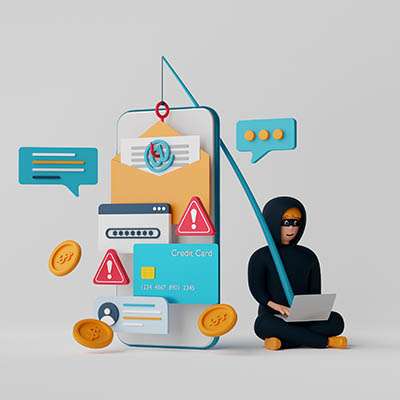
From the classic Nigerian Prince emails to the cleverly crafted fake invoice, malicious digital correspondence is a constant threat to a business. It's not just about losing a few dollars. A successful phishing attack can cripple your operations, compromise sensitive data, and even lead to your organization's demise.
There are a bunch of shortcuts that most of us should already know: cut, copy, paste, new tab, things like that. These are the basics. That being said, if you really want to show off for the boss—blowing them away with your efficiency and professionalism—some more advanced options are also handy to know.
Listed below are some shortcuts to take advantage of:
Remember the stereotypical hacker? A single kid in a hoodie, fueled by caffeine and curiosity, breaking into a system just for the thrill or bragging rights? That image is obsolete. Modern hacking has evolved from a counter-cultural movement into a sophisticated, multi-trillion-dollar global industry.
Despite the immense productivity and convenience that come from using a smartphone, it’s imperative to remember that these devices are miniature computers in our pockets. This means that they are just as susceptible to threats as a computer or laptop. According to the National Security Agency, powering down your device is one of the most effective ways to protect your smartphone from various threats. Listed below is why.
It would seem that the people responsible for the recent heist at the Louvre, which netted over $101 million in jewelry, may have utilized a more complicated plan than strictly necessary. According to a French publication, the famous museum has a long history of cybersecurity mistakes and faux pas… many of which, given the museum’s fame, are truly shocking.
Listed below is what we know about the Louvre’s protections over the years, and what they suggest about the current state of things. Hopefully you'll learn a thing or two by doing so.
An old fable says that a frog placed in a pot of boiling water will jump out immediately, but if the water is warmed to boiling with the frog already in it, the frog won’t notice until it is already too late. Many modern businesses act like that frog, overlooking minor tech problems that signal a growing issue until the damage is done.
Let’s see if we can identify some of these issues to help keep you out of hot water.
We’ve seen firsthand how the shift to remote work has revolutionized business operations. That being said, one area that still causes friction for many business owners is virtual meetings. A poorly executed remote meeting isn't just a time-waster, it can also drain productivity and disengage your team, damaging your company culture. Listed below are a few tips that show that with the right strategy and tools, your remote meetings can be even more effective and engaging than their in-person counterparts.