

Hope is a powerful force and it constantly propels us forward and can brighten even the darkest days. We hope for good health, happy families, and that winning lottery ticket.
Alas, hope is a terrible cybersecurity strategy.

Hope is a powerful force and it constantly propels us forward and can brighten even the darkest days. We hope for good health, happy families, and that winning lottery ticket.
Alas, hope is a terrible cybersecurity strategy.
With so many devices now connecting to the Internet, decreasing your business’ threat surface area is more critical than ever. Your threat surface area consists of any device that connects to your organization’s IT infrastructure, and if you’re not careful or forget a couple of oddball wearables, you could be looking at a data breach. Listed below is how you can prevent that from happening.
Fairly recently, news circulated that a data breach had exposed 16 billion passwords for numerous logins, including social media accounts, virtual private networks, corporate tools, and more. Effectively, every online service imaginable was represented in this breach.
This is very bad… arguably unprecedented.
That being said, this impression is at best misleading. Listed below is a look into the truth of the matter, while still acknowledging that there are some lessons to be learned.

When it comes to cybersecurity, organizations have a lot to keep tabs on, even small organizations. In fact, you wouldn’t believe just how much goes into cybersecurity and why your business needs to make it a priority. Cybersecurity is more than just a buzzword on the Internet; it’s a lifeline that will keep your business secure.

Third-party vendors are essential for today's businesses; they deliver mission-critical resources and tools to the organizations that utilize them, including raw materials, software, and other services. Alas, these vendors can also serve as direct lines into your business for a cyberattack to take advantage of for their own purposes.
Listed below: how you can still lean on your vendors without sacrificing your critically important security.
The constant talk about cybersecurity can really be overwhelming. While some Internet tales may be exaggerated, the reality is that these cybersecurity risks are a serious concern for every organization. Is your business truly prepared to confront the sophisticated digital adversaries of our time? Listed below is a look at three prevalent cyberthreats that could inflict significant damage on a business, and what you can do to keep them from negatively impacting yours.

For all the effort and investment a modern business needs to put into its cybersecurity, it is equally critical to acknowledge each team member's role in an organization’s security protections. Many of your employees, through no inherent fault of their own, are themselves a vulnerability as they allow many cyberthreats into your infrastructure via scams and simple mistakes. That being said, this doesn’t have to be the case.
Listed below: why it is imperative that you train your team to be a cybersecurity asset and how to do so.

We're all busy. Whether you're steering the ship or making sure the daily operations run smoothly, cybersecurity might feel like another drain on your time. Imagine a day when everything grinds to a halt, trust evaporates, or significant money vanishes into thin air. These aren't abstract fears, they are all-too-real consequences of cybersecurity oversights, creating moments that everyone in a business, from top to bottom, desperately wants to avoid… and can.

There are a few occasions that we get a very apparent example of how imperative basic cybersecurity is, regardless of where you are, and this year’s National Football League draft provides one such example.
For those who don’t follow the NFL or the draft proceedings, multiple draftees received prank calls during the process, although one in particular is applicable to businesses of all kinds. Let’s examine this situation to reinforce a few important cybersecurity best practices.

The world of cybersecurity is in constant flux, demanding that businesses continually reassess their defensive strategies. A traditional focus solely on preventing breaches, while crucial, is proving insufficient in the face of sophisticated and persistent threats. As highlighted in a recent Illumio podcast episode, "Trust & Resilience: The New Frontlines of Cybersecurity," the very foundation of digital interaction—trust—has ironically become a primary vulnerability exploited by attackers. This necessitates a fundamental shift in perspective.
If you're like many small and medium-sized business owners, you're juggling countless online passwords for email, banking, software, supplier portals, and more. It can be overwhelming. This usually leads to using simple or repeated passwords, which opens the door to cyber threats like data breaches, a serious risk for any business. Fortunately, there's a straightforward solution: a password manager.

Bring Your Own Device, or BYOD, is a common approach for businesses that want to take advantage of mobile technology to increase productivity. Instead of supplying each individual employee with company-owned devices, businesses allow employees to utilize their own devices for work-related purposes. While this is great on the budget, it’s only really effective, and safe, if the employee prioritizes security on their devices; otherwise, it’s a liability.

Every year, new malware, ransomware, and cyber threats emerge from the depths of the internet, evolving like a villain in a sci-fi movie. One moment, you’re minding your own business, and the next, your company’s data is held hostage and a hacker is demanding you pay them in Bitcoin.

The Android operating system periodically receives updates and patches detailed in online publications called Android Security Bulletins. In the March 2025 edition, Google announced that 43 malicious bugs had been resolved, two of which were zero-day vulnerabilities.
Listed below: how to implement these fixes and why this is a practice that should reach every aspect of your organization's IT.

It's no surprise that cybersecurity is a big challenge for businesses and individuals alike. The problem: life pretty much revolves around being online these days, so there’s no avoiding it. Thus, it’s your responsibility to ensure that any data you collect from your customers, employees, and other key stakeholders in your business is well-protected, otherwise you will face severe consequences.
We’ve all had to confirm we’re human when attempting to log into an account. This is the core purpose of what once was called CAPTCHA… the Completely Automated Public Turing test to tell Computers and Humans Apart. That being said, it seems surprising that computers don’t easily overcome these simple-seeming tests.
Listed below is why these simple tests actually are effective at differentiating between human users and automated bots.

In the United States, tax season is prime time for hackers to take advantage of law-abiding, tax-paying citizens. They do this via all types of nefarious activities, such as phishing attacks conducted through text messages and emails claiming to be from the Internal Revenue Service. If you want to avoid getting scammed this tax season, be sure to keep the following tips in mind to stay safe while you conduct your typical tax routines.
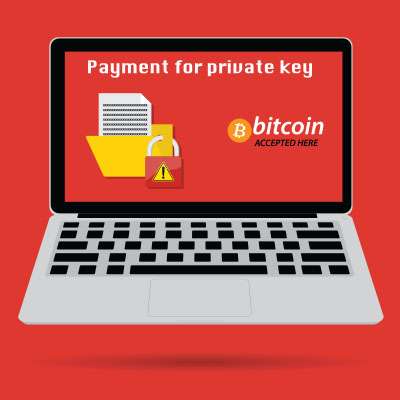
Despite some of the headlines that we saw last year, it wasn’t all bad news regarding ransomware. Crucially, 2024 saw ransomware payments plummet by hundreds of millions of dollars… despite many large-scale attacks and one record-breaking whaling payment of $75 million by one victim.
This is undeniably great to hear… but with that in mind, you cannot let yourselves slip into complacency.
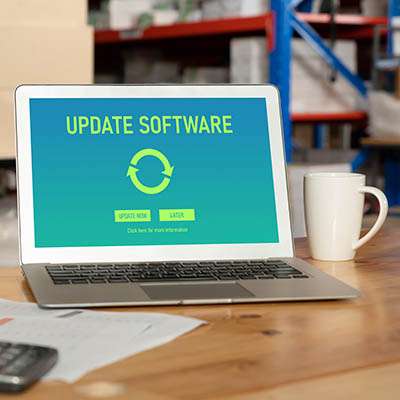
Windows 10 is rapidly reaching the end of its secure lifetime, with support scheduled to end on October 14, 2025. While this doesn’t mean that the OS will no longer be available to use, it does mean that it will no longer be able to be safely and securely used, a critically imperative distinction.
That is, however, unless you pay for the Windows 10 Extended Security Updates… but is this a feasible or maintainable strategy for businesses?
Running a business is already confusing enough without worrying about security at all times. Whether you own a small business or a multi-level enterprise, security is just as imperative for all the same reasons. Listed below are a couple of security strategies you can implement today to feel better about the current state of your infrastructure moving forward.


